The global race for critical minerals is accelerating. Lithium, cobalt, nickel, manganese, rare earths – the building blocks of clean energy technologies, are now central to energy security, industrial competitiveness, and geopolitics. Yet for many countries in the Global South, this moment carries a familiar risk: supplying the raw materials for the global energy transition, while capturing only a fraction of its economic value.
It is precisely this challenge that the Council for Critical Minerals Development in the Global South, convened by Sustainable Energy for All (SEforALL) and Global South Center for Clean Transportation, UC Davis, was established to address. The Council was created to shift the critical minerals conversation from extraction alone toward value addition, green industrialization, and shared prosperity – ensuring that mineral-rich countries are positioned not only as suppliers, but as manufacturers, innovators, and owners of their clean energy futures.
As the Council entered its first full year of operation in 2025, the second half of the year marked a transition from agenda-setting to implementation. Across Africa and Southeast Asia, the Council’s work moved decisively into country planning, regional policy frameworks, and global coalition-building. The focus was consistent: translating mineral wealth into jobs, industrial capacity, and resilient value chains aligned with national development priorities.
The Council’s work in late 2025 demonstrated that critical minerals development cannot be tackled in isolation. In Southeast Asia, the Council supported ASEAN Member States to move from fragmented national approaches toward a more coordinated regional framework.
Through a series of technical consultations, ministerial meetings, and investment forums, the Council helped ASEAN countries articulate a shared approach to sustainable minerals development; one that prioritizes downstreaming, environmental and social governance, circularity, and regional cooperation.
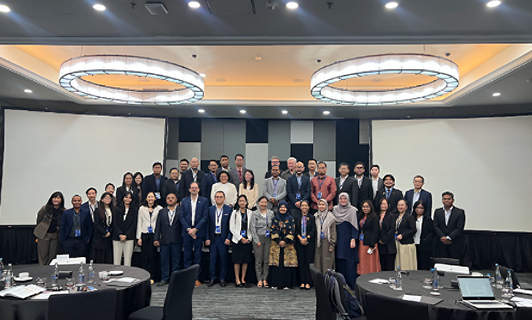
For instance, at the ASEAN Ministerial Meeting on Minerals (AMMin) and the ASEAN Minerals Investment Forum (AMVest) 2025 in Lao PDR, SEforALL supported ASEAN Member States and the ASEAN Secretariat in advancing the development of the ASEAN Mineral Policy and Investment Guidebook, a key regional initiative aimed at strengthening sustainable and responsible minerals investment. The discussions focused on refining the Guidebook’s analytical framework, aligning it with ASEAN policy priorities, and incorporating Member State inputs on critical minerals, downstreaming, environmental and social governance, and investment facilitation. ASEAN ministers and senior officials welcomed SEforALL’s technical support, with the Secretariat confirming a final review process and publication targeted for early 2026.
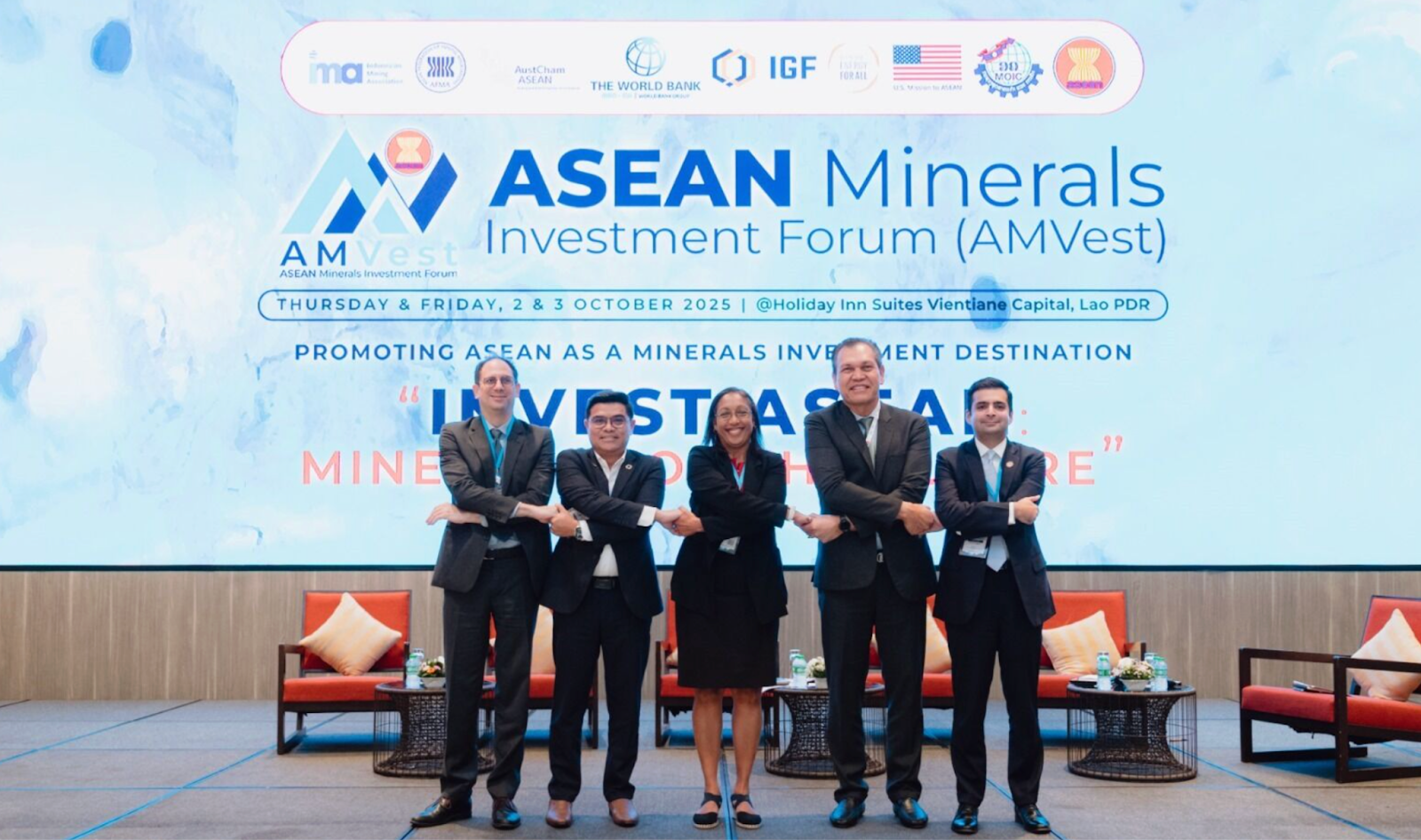
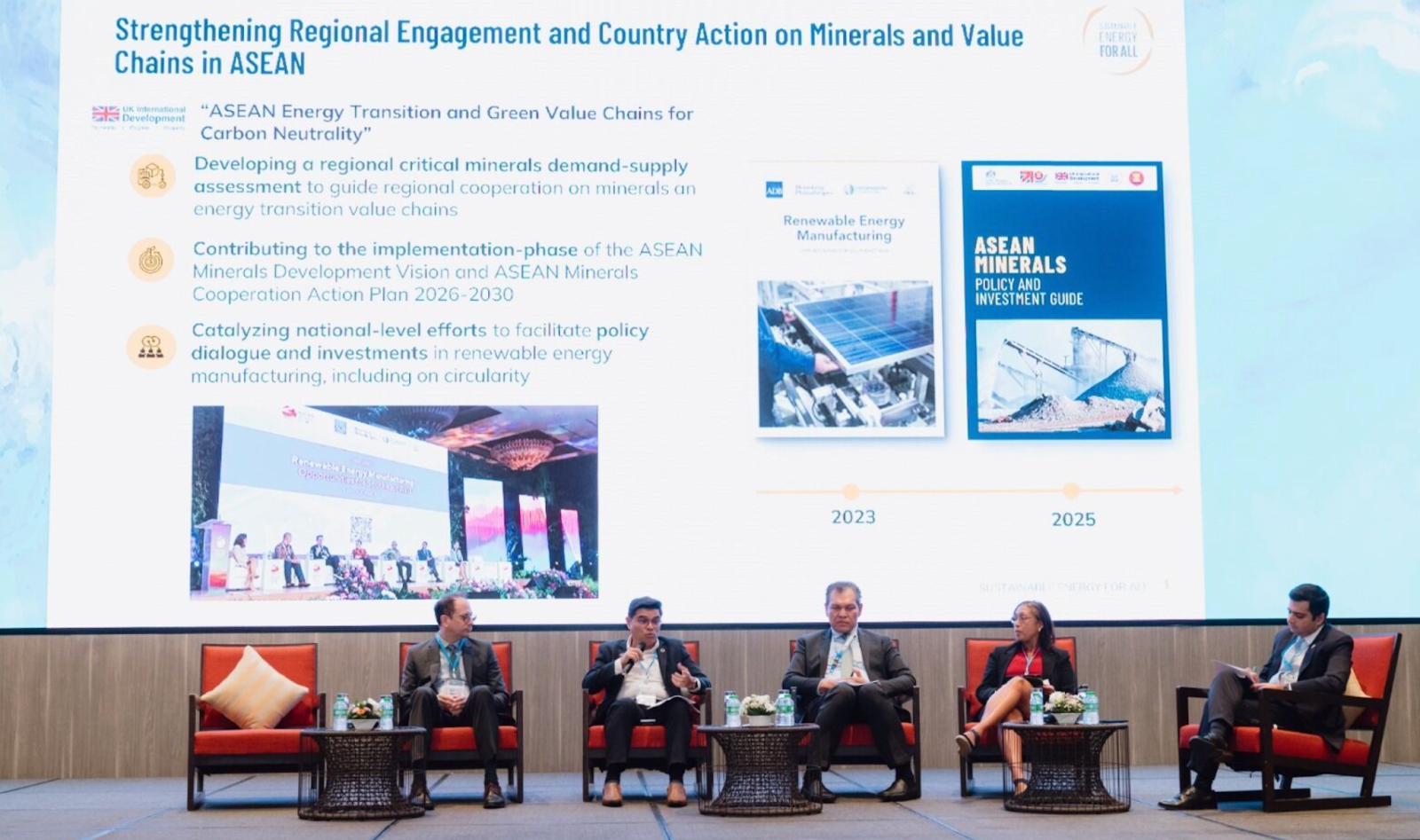
Images: ASEAN Minerals Investment Forum (AMVest) 2025 in Lao PDR.
In parallel, SEforALL convened a high-level panel at AMVest titled “Minerals for the Energy Transition: Unlocking Value through Downstreaming, Circularity, and Regional Cooperation.” The session brought together representatives from the UK High Commission, the Asian Development Bank, UN ESCAP, the Intergovernmental Forum on Mining, Minerals, Metals and Sustainable Development (IGF), and Malaysia’s Department of Minerals and Geosciences to examine how ASEAN can move beyond raw material exports toward integrated regional value chains. Panel discussions highlighted the role of circular economy approaches, cross-border cooperation, and responsible investment in ensuring that ASEAN’s mineral resources support clean energy manufacturing and long-term industrial development—reinforcing the Council’s focus on linking minerals to local value creation.
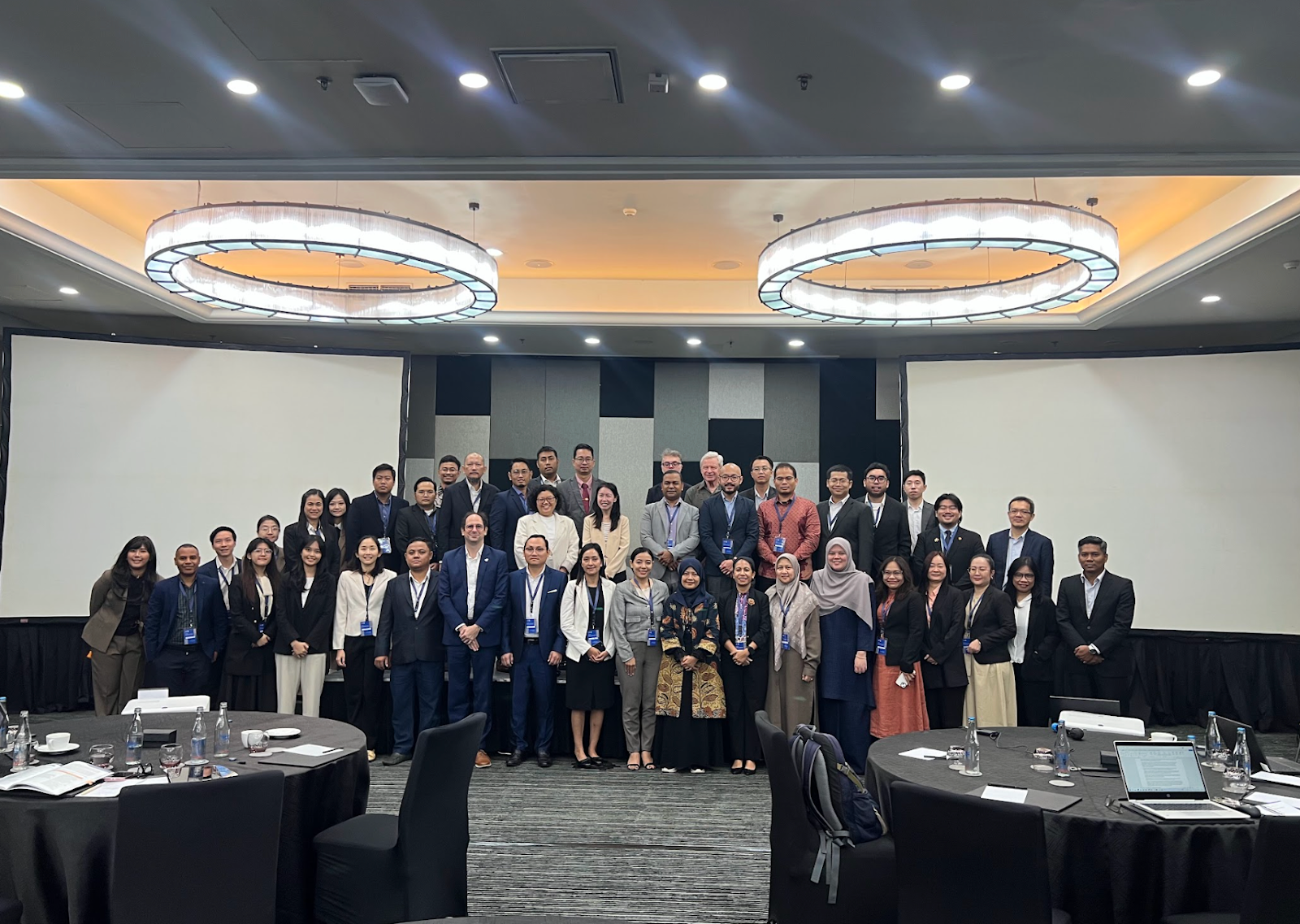
Image: Workshop on Developing the ASEAN Principles for Sustainable Minerals Development (APSMD) Implementation Guideline and Strengthening Policy & Investment Alignment, November 2025, Bali, Indonesia. Co-organized by ASEAN Secretariat, UN ESCAP, and SEforALL.
For countries like Thailand, Cambodia, and Lao PDR, discussions increasingly centered on how mineral resources can support battery manufacturing, clean energy supply chains, and industrial upgrading, rather than remaining locked in low-value exports. Across these engagements, common challenges emerged: limited data, capacity constraints, and the need to align mineral policy with energy and industrial planning. Addressing these gaps has become a defining focus of the Council’s next phase of work.
In the second half of 2025, the Council for Critical Minerals Development in the Global South advanced its agenda on major global platforms by bringing forward evidence-based proposals rooted in country experience. At forums such as the IGF Annual General Meeting, the G20 Energy Transition Working Group, and UN General Assembly–linked dialogues, the Council consistently reinforced a central message: the global energy transition depends on inclusive mineral value chains that deliver real development outcomes for producing countries.
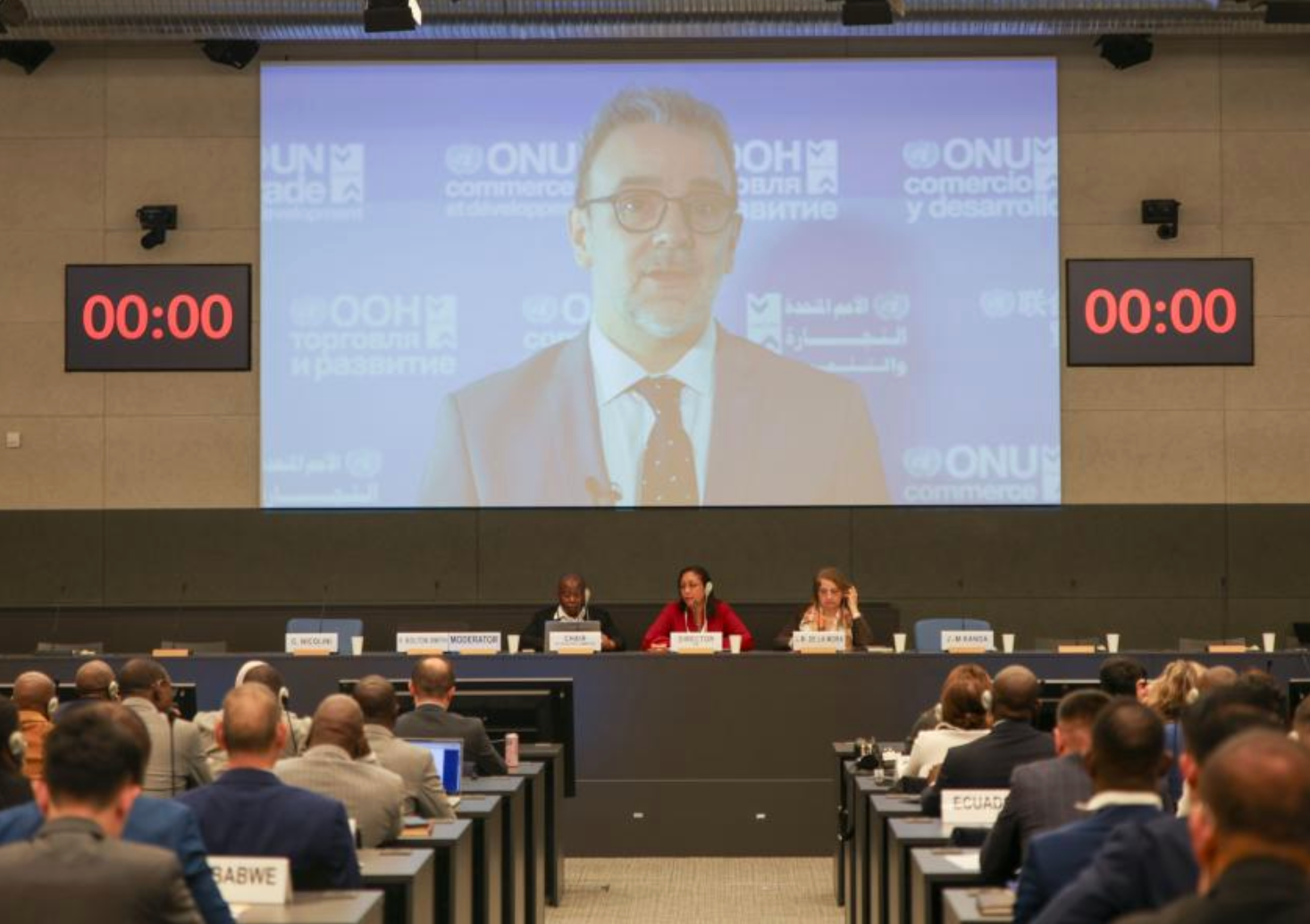
Image: Pedro Manuel Moreno, Deputy Secretary-General, UNCTAD, addressed the opening session via a video message. 21st Annual General Meeting (AGM) of the Intergovernmental Forum on Mining, Minerals, Metals and Sustainable Development (IGF). Credit: IISD.
Across these engagements, the Council highlighted a growing shift among mineral-rich countries—from supplying raw materials toward building local capacity in refining, processing, manufacturing, and skills development. The Council’s contributions demonstrated that this transition is not aspirational, but achievable when supported by coherent policy frameworks, access to finance, and stronger South–South collaboration.
These discussions also marked a broader narrative shift. Global South countries were increasingly positioned as co-authors of the energy transition, shaping how mineral demand translates into local economic opportunity. By anchoring global conversations in concrete country roadmaps and regional cooperation frameworks, the Council helped bridge the gap between global clean energy demand and national development priorities.
This approach was reflected at the IGF Annual General Meeting in November 2025, where SEforALL engaged governments, industry, and development partners on advancing “value beyond extraction.” The dialogue focused on how mineral endowments can support downstream processing, manufacturing, and inclusive value creation—reinforcing the Council’s objective of aligning critical minerals development with long-term economic transformation.
These global engagements laid the groundwork for the Council’s next phase of work: translating shared ambition into targeted country and regional action.
At the 80th United Nations General Assembly, SEforALL convened a high-level roundtable titled “Minerals to Manufacturing: Advancing Global South Ambitions to Build Clean Technology Value Chains,” positioning the Council for Critical Minerals Development in the Global South at the center of the discussion. Bringing together governments, industry leaders, development partners, and financiers, the dialogue moved beyond questions of mineral supply to focus on how countries can translate resource endowments into domestic clean energy manufacturing and industrial growth.
The roundtable showcased concrete outputs from SEforALL’s Green Industrialisation Hub, alongside early findings from Nigeria’s energy transition minerals supply-demand assessment, led by the Council. These insights illustrated how rapidly rising demand for clean energy technologies – including solar, batteries, and electric mobility – will drive new mineral requirements, and why aligning mineral strategies with national industrial and energy plans is now essential. The discussion reinforced a core Council principle: the energy transition must connect minerals to manufacturing, so that value creation, jobs, and technological capability are retained within developing economies. Participants also identified priority areas for intervention – including policy coherence, investment de-risking, skills development, and regional cooperation – highlighting where targeted partnerships can accelerate countries’ progress from extraction toward competitive, local value chains.

Image: High-level roundtable on ‘Minerals to Manufacturing: Advancing Global South Ambitions to Build Clean Technology Value Chains.’
By the end of 2025, the Council for Critical Minerals Development in the Global South has moved decisively from concept to action. What began as a platform to reframe the critical minerals debate is now evolving into an implementation engine – supporting countries to design investable strategies, strengthen regional cooperation, and engage global partners.
The year ahead will focus on scaling this impact: deepening country-level work in Africa and ASEAN, advancing green industrialization roadmaps, and building stronger coalitions that link minerals, energy, finance, and manufacturing. As demand for critical minerals continues to rise, the Council’s role is becoming increasingly clear – ensuring that the minerals powering the global energy transition also power inclusive growth, resilient industries, and shared prosperity in the countries where they are found.


